
How to Safely Buy, Sell, and Trade Gaming Accounts and Digital Assets on Online Marketplaces
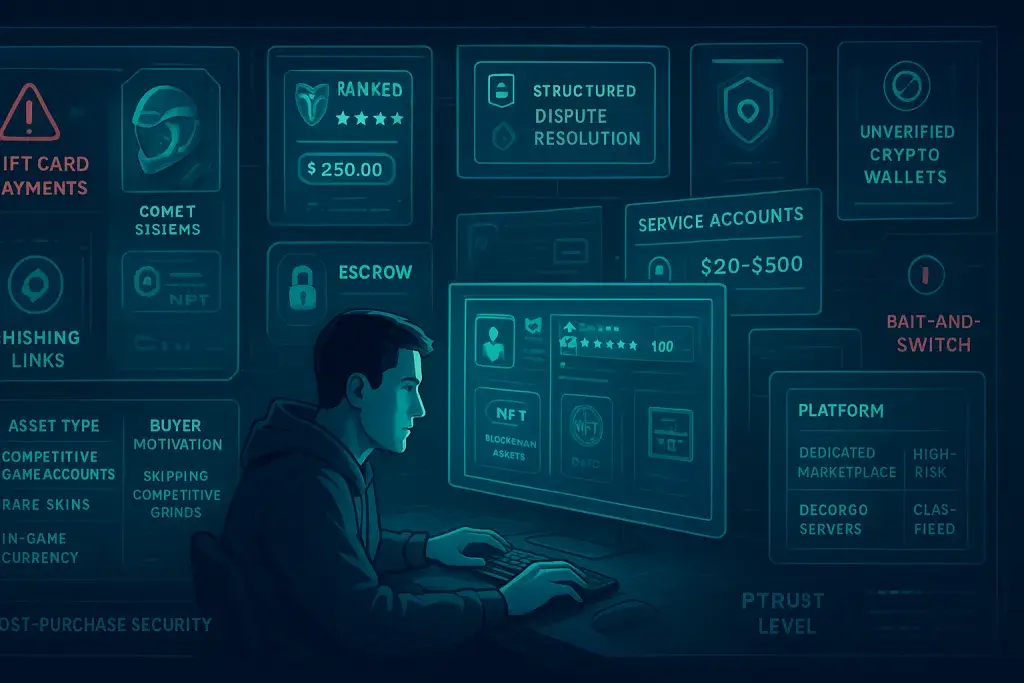
Authored by bahiscasino519.com, 08-03-2026
A fully leveled account in a competitive online game can sell for more than a month's rent in some cities. That's not an exaggeration - it's a reflection of how seriously players value their time, and how willing others are to pay to skip the grind. The market for gaming accounts and digital assets has matured from informal forum handshakes into a structured, high-volume economy where thousands of transactions happen every day across dozens of platforms.
What hasn't kept pace with that growth is widespread awareness of how to participate safely. Most first-time buyers and sellers enter this space without knowing what a trustworthy platform actually looks like, which payment methods offer real protection, or how quickly an account can be recovered by its original owner after a sale goes through. Platforms like accsmarket have developed specifically to address these gaps, building features like original email address delivery and structured dispute resolution into the transaction process itself. Knowing what those protections look like - and how to demand them - is what separates confident traders from people who lose money.
This guide covers the full picture: how the market works, how to choose a platform worth trusting, how to buy and sell without exposing yourself to fraud, what the legal and policy landscape actually means for you, and how to build a lasting reputation as a reliable participant. Whether you're making your first purchase or your fiftieth, every section here is built around practical decisions, not theoretical advice.
Understanding the Digital Account and Gaming Marketplace Ecosystem
Before you can trade intelligently, you need to understand what you're actually trading and why a market for it exists in the first place. An account marketplace is a platform - purpose-built or general - where users list, purchase, and transfer access to gaming accounts, in-game currencies, rare items, and other forms of digital value. These platforms range from dedicated virtual goods marketplaces with escrow systems and seller ratings to unmoderated classified ad sites where transactions operate entirely on trust.
The demand side of this market is straightforward. Competitive online games require enormous time investment to reach top ranks or unlock rare content. Many players are willing to pay real money to skip that investment, whether to compete immediately at a high level, access limited-time cosmetics that are no longer available, or simply own an account with a clean history and desirable username. That willingness to pay creates a market, and where there's a market, there are sellers.
Digital asset trading covers a broader range of goods than most newcomers expect. It's not limited to game accounts with high rankings. The category includes in-game currencies, rare skins and cosmetic items, social media accounts with established audiences, streaming platform subscriptions, and blockchain-based game assets tied to NFT ownership. Each category carries its own pricing logic, risk profile, and buyer motivation.
The following table illustrates the major asset types, their typical value ranges, and what drives buyers toward them. Note that prices vary widely based on game popularity, asset rarity, and current market demand - the ranges below reflect general market patterns rather than fixed figures.
| Type of Digital Asset | Common Examples | Typical Value Range | Primary Buyer Motivation |
|---|---|---|---|
| Ranked Game Accounts | High-rank competitive accounts | $20-$500+ | Skip competitive grind |
| In-Game Currency | Gold, gems, coins | Varies widely | Accelerate progression |
| Cosmetic Items | Rare skins, limited outfits | $5-$1,000+ | Exclusivity and aesthetics |
| Service or Platform Accounts | Streaming and productivity tools | $5-$200 | Cost savings, access |
| Blockchain Game Assets | NFT characters, in-game land | $1-$10,000+ | Play-to-earn, investment |
One term worth defining clearly before going further: throughout this article, "digital asset" refers to any account, in-game item, currency, or credential that holds value and can be transferred between parties. This includes traditional game accounts but also the broader universe of virtual goods that move through online marketplaces daily. With that foundation established, the next critical question is where to carry out these transactions.
Choosing the Right Platform for Buying or Selling
The platform you choose determines more about your safety than any other single decision in a gaming account exchange. A well-structured marketplace provides the infrastructure that makes honest transactions possible. A poorly designed or outright fraudulent platform removes every layer of protection and leaves both parties exposed. Understanding the landscape before you list or bid is not optional - it's the first act of self-protection.
Types of Platforms and Their Trade-Offs
Not all platforms that host online account sales operate with the same level of accountability. The major categories each carry distinct advantages and risks that buyers and sellers need to weigh before choosing where to transact.
| Platform Type | Trust Level | Buyer Protection | Seller Protection | Risk Level |
|---|---|---|---|---|
| Dedicated Account Marketplace | High | Yes (escrow or guarantee) | Moderate to High | Low to Medium |
| General Classified Ad Sites | Low | None | None | High |
| Gaming Forums | Medium | Minimal | Minimal | Medium to High |
| Discord Servers or Social Media Groups | Very Low | None | None | Very High |
Dedicated account marketplaces built specifically for digital asset trading offer the clearest structural advantages: dispute systems, seller ratings, and payment controls that neither party can easily circumvent. General classified sites offer no protection at all - they're essentially bulletin boards where trust between strangers is entirely self-managed. Gaming forums occupy a middle ground, often with community reputation systems but no formal financial protections. Discord servers and social media groups are the highest-risk environments and are responsible for a disproportionate share of fraud in this space.
Key Features to Look for in a Trustworthy Marketplace
Once you've decided to use a structured platform, the next step is evaluating whether a specific marketplace meets minimum safety standards. Several features reliably distinguish trustworthy platforms from those that merely look professional.
- Escrow payment systems that hold funds in a neutral account until both parties confirm a successful transfer
- Verified seller badges backed by identity or track record confirmation, not just self-declaration
- A functioning dispute resolution process with human review, not only automated responses
- Original email address inclusion with account purchases, giving buyers full ownership control
- Active fraud monitoring and account verification requirements for sellers
- Clear and enforceable refund or replacement policies, written in plain language
- Payment processing secured by SSL with reputable payment processor integration
- Transparent fee structures so buyers and sellers know exactly what they're paying
The original email address point deserves particular emphasis. When you purchase a gaming account, the original owner can often recover it by contacting the game's support team and providing the original email used to create the account. Without access to that email, your control over the account remains incomplete regardless of what password you've set. Any reputable virtual goods marketplace that sells full accounts should make original email delivery a standard part of the listing - not an optional add-on.
Red Flags That Signal an Untrustworthy Platform
Fraudulent platforms have become increasingly sophisticated in their presentation. A professional-looking website, polished listings, and an abundance of five-star reviews are no longer reliable indicators of legitimacy. Watch specifically for these warning signs:
- No verifiable contact information, physical address, or company registration details
- Pressure to complete payment through irreversible methods such as gift cards or unverified cryptocurrency wallets
- No functioning dispute resolution system - only a generic contact form
- Review profiles with uniformly perfect scores and no critical feedback whatsoever
- No seller verification or identity confirmation process before listing
- Account prices that are dramatically below comparable listings elsewhere
That last point is worth dwelling on. A high-rank account being sold at a fraction of market rate is almost never a genuine deal. It typically signals either a stolen account, a bait-and-switch setup, or a platform designed to collect payment and disappear. Before using any marketplace for the first time, search the platform name alongside terms like "scam" or "review" in independent forums and review aggregators. Community feedback from actual users is more reliable than anything the platform says about itself.
How to Safely Buy a Gaming Account or Digital Asset
Buying through a reputable account marketplace reduces your risk significantly, but it doesn't eliminate it. The steps you take before paying and immediately after receiving access are what determine whether a purchase actually works out in your favor. Skipping any part of this process - even once - is how experienced buyers end up losing money.
Researching and Verifying the Account Before Purchase
The due diligence you perform before paying is your primary defense against receiving something different from what was advertised. Follow this sequence for any significant purchase:
- Request proof of ownership in the form of screenshots, recent gameplay recordings, or a live screen share where the seller demonstrates active access to the account.
- Verify account statistics through third-party tracking tools or public profile APIs specific to the game - do not rely solely on seller-provided images, which can be edited.
- Check whether the account has any ban history accessible through public records or game-specific lookup tools.
- Confirm exactly what is included in the sale: account credentials, original email address, linked phone number status, in-game items, and currency balances.
- Ask whether any active subscriptions, stored payment methods, or linked third-party services are attached to the account.
- Review the seller's feedback history, average rating, and time active on the platform - new accounts with no history warrant additional caution regardless of their listed prices.
As a practical example: if you're purchasing a high-rank competitive shooter account, use the game's public stat-tracking site to independently confirm the rank, match history, and win rate before engaging the seller further. Then ask for a short video clip showing the seller currently logged in. This two-step verification catches both doctored screenshots and accounts that have been demoted since the listing was created.
Safe Payment Practices for Buyers
How you pay matters as much as where you buy. Some payment methods provide meaningful recourse if something goes wrong; others offer none at all. The table below summarizes the most common options in the context of a gaming account exchange.
| Payment Method | Buyer Protection | Reversibility | Recommended for Account Purchases |
|---|---|---|---|
| Platform Escrow | High | Yes, via dispute process | Strongly recommended |
| PayPal Goods and Services | Medium | Yes, via chargeback | Acceptable with trusted sellers |
| Credit Card | Medium | Yes, via chargeback | Acceptable |
| Cryptocurrency | None | No | Only on fully verified platforms |
| Gift Cards or Wire Transfers | None | No | Never - treat as a fraud signal |
Platform escrow is the gold standard because it removes the seller's ability to disappear with payment before delivering the account. Funds are only released when the buyer confirms receipt and satisfaction. Credit cards and PayPal Goods and Services provide limited chargeback options if something goes wrong, but chargebacks are not guaranteed to succeed for digital goods disputes. Any seller who insists on gift cards, wire transfers, or direct cryptocurrency payments to an unverified wallet is signaling that they want a transaction that cannot be disputed - which is exactly what fraudsters need.
Securing the Account After Purchase
Paying for an account and receiving login credentials is not the end of the process. Until you complete the following steps, the original owner retains multiple pathways to recover the account through platform support - often without any evidence of wrongdoing on their part, because game companies generally side with whoever can verify original account creation.
- Change the account password immediately upon receiving access.
- Change the associated email address to one you personally own and control - this is the most critical step.
- Enable two-factor authentication using your own phone number or authenticator app.
- Remove any linked phone number belonging to the seller.
- Review connected third-party apps and remove any you didn't add yourself.
- Update or remove any stored payment information associated with the account.
- Take timestamped screenshots documenting each step of the transfer as a record of your ownership.
Speed matters here. The longer the original owner's contact information remains on the account, the larger the window for recovery. Complete this checklist within the first hour of receiving access, before doing anything else with the account.
How to Safely Sell a Gaming Account or Digital Asset
Sellers face a different set of risks than buyers, but they're no less serious. Chargeback fraud, off-platform scams, and undervalued listings are the most common ways sellers lose out. A disciplined approach to pricing, listing, and transaction management keeps the process clean and protects your earnings.
Pricing Your Account or Digital Asset Accurately
Incorrect pricing is the most common mistake sellers make, and it cuts both ways. Overpricing leads to stale listings and eventual desperation discounts; underpricing means leaving money on the table. Several factors determine what an account is actually worth on the open market:
- Current rank or progression level within the game
- Rarity of owned skins, cosmetics, or limited-edition items
- Account age and standing - no bans, good behavior history, and verified status all increase value
- Whether the original email address is included in the sale
- The game's current popularity and active player base at the time of listing
- Comparable completed sales on the same or similar virtual goods marketplaces
The key word above is "completed." Active listings show asking prices, not transaction prices. What buyers are willing to pay is reflected in what has already sold. Browse recently completed transactions on the relevant account marketplace before setting your price, and position your listing just below the highest comparable completed sale to attract early attention without undervaluing your asset.
Creating a Trustworthy and Effective Listing
A well-constructed listing does two things simultaneously: it attracts serious buyers and it filters out bad-faith actors. Vague listings with minimal detail attract low-ball offers and fraudulent inquiries. Detailed, honest listings with strong visual evidence command better prices and faster sales.
- Include clear, current screenshots of account stats, inventory, rank history, and account standing
- Disclose any past bans, warnings, or platform violations clearly and upfront - buyers who discover these post-sale become dispute risks
- Specify exactly what is included: email access, phone number removal status, in-game currency, and item inventory
- List the game region and language settings, which affect usability for international buyers
- State accepted payment methods, expected delivery timeframe, and your availability to support the transfer
Transparency protects sellers as much as it protects buyers. A buyer who purchases an account knowing its full history has no credible basis for a dispute if that history was accurately represented. Sellers who obscure negative details create their own liability.
Protecting Yourself from Buyer Fraud and Chargebacks
Chargeback fraud is a real and documented problem in online account sales. The pattern is straightforward: a buyer pays for an account, receives access, then disputes the payment with their bank or payment processor, claiming the transaction was fraudulent or the goods were never delivered. Because digital goods disputes are harder to adjudicate than physical ones, these chargebacks sometimes succeed even when the seller did everything correctly.
- Use platform escrow rather than accepting direct payment, which removes the chargeback pathway entirely for the settlement portion
- Keep all communication on-platform and never agree to move conversations to private email, phone, or messaging apps - off-platform communication is where fraud attempts accelerate
- Document every step of the account transfer with timestamped screenshots before, during, and after delivery
- Never transfer account access before payment has been confirmed and released through the platform
- Treat any buyer request to transact outside the platform as an immediate red flag, regardless of how reasonable the stated reason seems
One point specifically about PayPal: standard PayPal seller protection does not cover digital goods, including gaming accounts. If a buyer initiates a chargeback for a PayPal transaction involving a gaming account exchange, the seller typically has limited recourse even with documentation. This isn't a reason to avoid PayPal entirely, but it is a strong reason to prefer platform escrow whenever it's available.
Legal, Ethical, and Platform Policy Considerations
The legal status of account trading and its relationship to platform rules are two separate things that often get conflated, to the confusion of both buyers and sellers. Understanding the distinction is essential before you commit to any transaction.
In most jurisdictions, buying or selling a gaming account is not illegal under general law. There is no widely enacted statute that prohibits the transfer of login credentials between consenting adults. What does exist, in virtually every major online game, is a Terms of Service agreement that prohibits account sharing, account selling, or both. These are contractual agreements, not laws - violating them exposes you to account termination, not criminal liability.
The practical consequence is that the primary risk in digital asset trading is not a fine or prosecution. It is a permanent account ban. Game publishers vary significantly in how aggressively they enforce these terms. Some use automated detection systems that flag accounts for unusual login patterns or rapid ownership changes; others rely on reports from other players or conduct periodic audits of high-value accounts.
| Game or Platform | Terms of Service on Account Trading | Enforcement Level | General Risk Level |
|---|---|---|---|
| Most major competitive games | Prohibited | Medium to High | Moderate |
| MMORPGs with active economies | Prohibited | High | Moderate to High |
| Steam (item trading) | Permitted via official market | Not applicable | Low |
| Blockchain and play-to-earn games | Permitted or actively encouraged | Low | Low |
There is also an ongoing debate within gaming communities about the ethics of account buying. Critics argue that purchasing high-rank accounts undermines competitive integrity, placing buyers into skill brackets they haven't earned and degrading the experience for other players. Proponents counter that account trading is a normal market transaction between willing parties, and that the game publisher's business interest - not community harm - is the main driver of restrictive Terms of Service. Both positions have merit, and neither is obviously wrong. What matters practically is that you understand the community you're entering and are prepared for how other players may respond.
Regarding broader consumer rights: several jurisdictions are actively developing frameworks around digital goods ownership, including questions of what consumers actually own when they purchase in-game items or accounts versus what they are licensing. These frameworks are still evolving, and account buyers should not assume robust legal protection of their purchases in the way they would expect for physical goods.
Common Scams and How to Avoid Them
The account trading market has attracted a well-developed ecosystem of fraud that preys specifically on the habits of inexperienced buyers and sellers. Knowing the mechanics of each scam type in advance is the most reliable way to recognize and avoid them in real time.
- Original Owner Recovery: After transferring an account to the buyer, the seller contacts the game's support team using the original email address and claims the account was stolen. The game restores access to the seller, who now has both the payment and the account. Prevention: obtain original email address access as part of every full account purchase, and complete the securing checklist immediately after transfer.
- Fake Middleman: A fraudster posing as a trusted escrow intermediary offers to hold funds during the transaction and then vanishes with the money. Prevention: use only the official escrow system built into the platform itself - never agree to use a "trusted intermediary" proposed by the other party.
- Chargeback Fraud: A buyer receives the account, confirms it is as described, and then initiates a payment reversal through their bank or payment processor. Prevention: use platform escrow, which holds funds until both parties confirm the transaction, and document every step of the transfer.
- Phishing Links in Listings: A fraudulent listing contains a link to a website designed to harvest your login credentials for the marketplace or payment platform. Prevention: always access marketplaces by typing the URL directly into your browser - never through links received in messages or listed on unverified pages.
- Bait-and-Switch: A listing prominently features a high-value account with compelling screenshots, but the credentials delivered belong to a different, lower-quality account. Prevention: verify the specific account's stats using third-party tracking tools before confirming receipt, and do not release payment until verification is complete.
- Fake Payment Confirmation: A buyer sends a screenshot showing a completed payment, but the transfer was never actually made. Prevention: confirm all incoming payments through your own account dashboard or bank statement - never accept a screenshot from the buyer as proof of payment.
If a scam has already occurred, act immediately. The window for effective recovery is short, and delay reduces your options at every step.
- Screenshot and preserve all chat logs, transaction records, and correspondence before anything can be deleted
- Report the incident to the platform's fraud team with all documentation attached
- Initiate a chargeback or payment dispute through your bank or payment processor if applicable
- File a report with relevant consumer protection authorities if the financial loss is significant
- Leave a factual, evidence-based review on the platform to warn other users - avoid emotional language and stick to documented facts
Best Practices for Long-Term Success in Digital Asset Trading
Single-transaction safety is one skill. Building a sustainable presence in the digital asset trading market requires a different mindset - one focused on reputation, consistency, and operational discipline over time. The traders who do best in this space are not the ones chasing the highest single-sale price. They're the ones who build trust with buyers, maintain clean transaction records, and treat account trading as a structured activity rather than an occasional impulse.
- Build your transaction history deliberately by starting with lower-value sales and accumulating verified positive feedback before listing high-value accounts - a proven track record commands both buyer confidence and better prices
- Maintain professional communication habits: respond promptly, write clearly, and keep every interaction on-platform where it is recorded and available as evidence if needed
- Use a dedicated email address for all marketplace activity, separate from personal and financial accounts - this reduces cross-contamination risk if a platform account is ever compromised
- Keep organized records of every transaction, including screenshots, receipts, and account transfer documentation, stored somewhere you control
- Monitor market conditions regularly - account values shift with game updates, new seasons, balance patches, and changes in the active player base, and sellers who track these shifts price more accurately
- Stay current on policy changes from both the games you trade and the platforms you use - Terms of Service updates can change the risk profile of specific accounts overnight
- Spread activity across more than one reputable marketplace to avoid complete dependence on any single platform's policies, uptime, or user base
There is also a useful strategic distinction between one-time sellers and repeat traders that affects how you should approach each transaction. A one-time seller's priority is maximizing value from a single asset - they can afford to wait for the right buyer and hold firm on price. A repeat trader's priority is velocity and reputation - lower margins per transaction are offset by volume and the premium pricing that comes with an established seller rating. Identifying which category you're in lets you make decisions that actually fit your goals, rather than copying strategies designed for a different type of participant.
Questions and Answers
Can I get permanently banned just for buying a gaming account, even if I did nothing wrong in-game?
Yes, that is possible on most major platforms. Game publishers can ban accounts based on detected ownership transfers, unusual login patterns, or automated flags - without requiring any in-game rule violation. The ban risk exists independently of how you behave after purchase, which is why account standing and ban history should be verified before buying, not after.
If I buy an account and the seller recovers it a week later, do I have any recourse?
Your recourse depends entirely on where you bought it. Reputable account marketplaces with escrow and dispute resolution can investigate and issue refunds or replacements when recovery fraud is documented. If you bought through social media or a private forum without escrow, you have almost no practical recourse - the transaction lacks any third-party infrastructure to enforce. This is the most compelling reason to use structured platforms for every purchase.
Why do some sellers insist on communicating outside the platform before completing a sale?
Off-platform communication removes the marketplace's ability to monitor, record, and moderate the transaction. For fraudulent sellers, that's the point - it makes it harder for you to document what was promised, and harder for the platform to support your dispute. Legitimate sellers have no meaningful reason to move conversations off-platform before a sale is complete. Treat this request as a strong warning signal.
Is it safer to buy blockchain-based game assets than traditional game accounts?
Blockchain assets offer verifiable ownership on a public ledger and cannot be "recovered" by a previous owner the way a traditional account can. However, they introduce different risks: wallet-draining scams, phishing attacks targeting crypto credentials, and high market volatility. The risk profile is different, not lower. The same rule applies: use established, reputable platforms with clear transaction processes regardless of the asset type.
What should I do if a buyer asks me to ship the account before their payment clears?
Do not transfer any account credentials before payment is confirmed and released through the platform's system - not a screenshot of a transfer, not a pending transaction notification, and not a promise to pay after verification. Confirmed and released means the funds are actually available in your marketplace account or have cleared through the escrow system. Any other arrangement puts you at full financial risk with no protection.